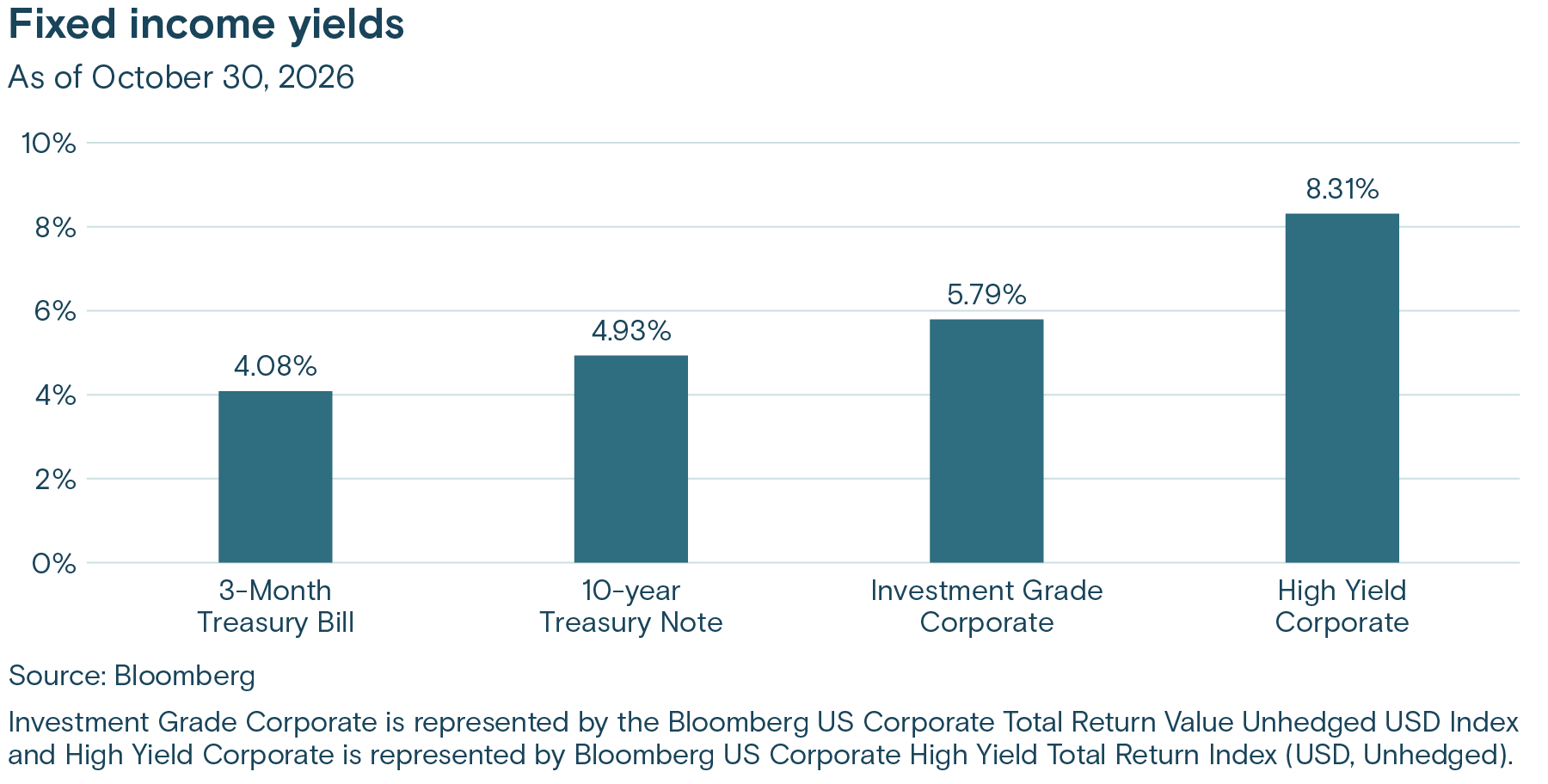
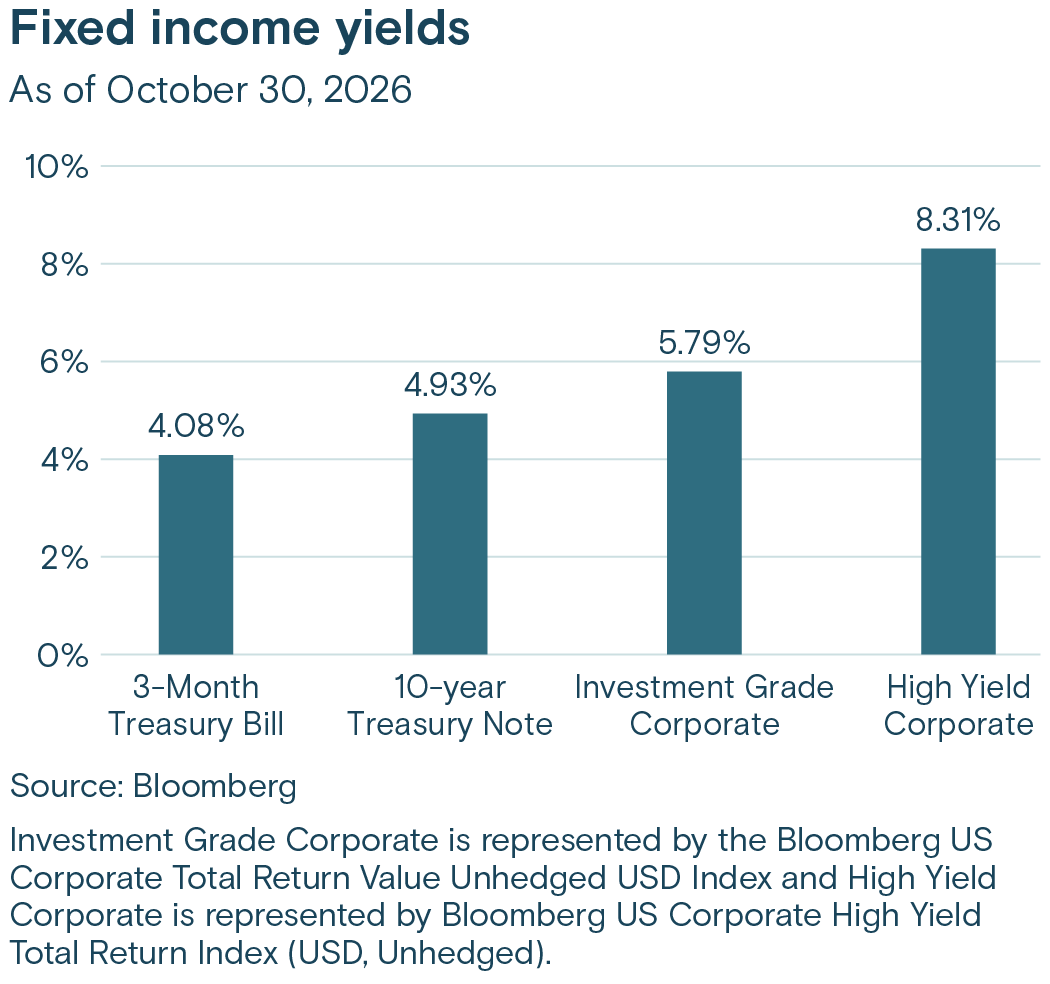
Investment-grade corporate bond yields are currently near 6%, levels that used to require exposure to the high-yield market. High-yield bonds include more credit risk than investment-grade corporates, but higher yields (8.31% as shown in the figure above) are offered as a premium for that additional risk.
While the high-yield market is more sensitive to the economic cycle than investment-grade corporates, the current economic outlook favors exposure. Additionally, the average credit rating of companies in the Bloomberg U.S. Corporate High Yield Index is currently high relative to its history, further diminishing overall credit risk. Finally, high-yield bonds tend to have shorter tenors, lowering their interest-rate sensitivity which may help improve portfolio diversification.
The tax-exempt municipal bond market is an often-overlooked part of the bond market, but it too is currently offering attractive yields. Because municipal bonds are generally exempt from federal income tax, and often from state or local income taxes if you live in the issuing state, yields are typically quoted on a tax-equivalent basis. This adjusts the yield higher to more accurately compare it to the yield of a taxable bond. While municipal bonds are generally issued with longer tenors, they offer diversification from corporate exposure because investments are largely made to state and local governments, public utilities, hospitals or school districts.
Growing alternatives to cash yields
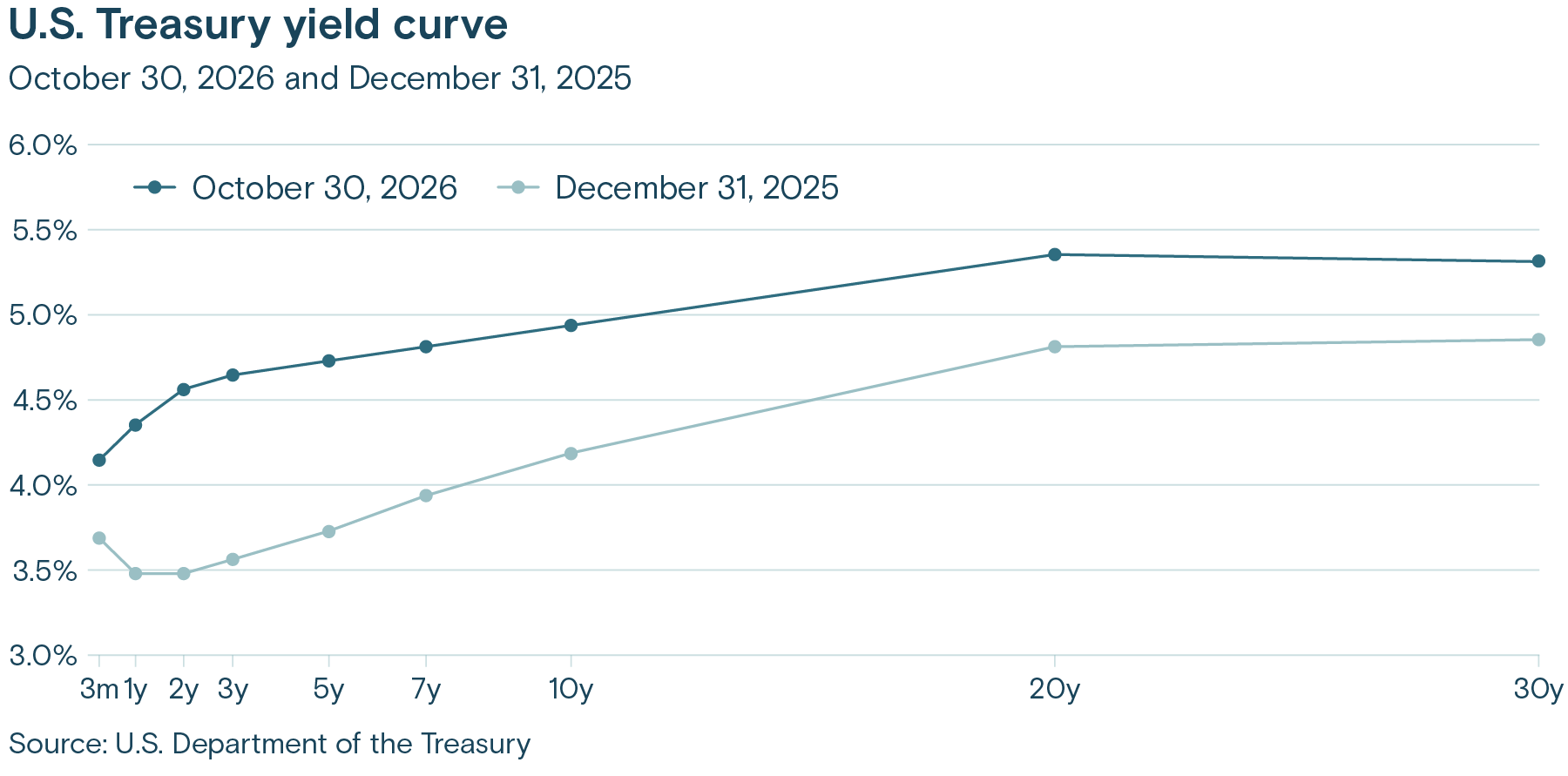
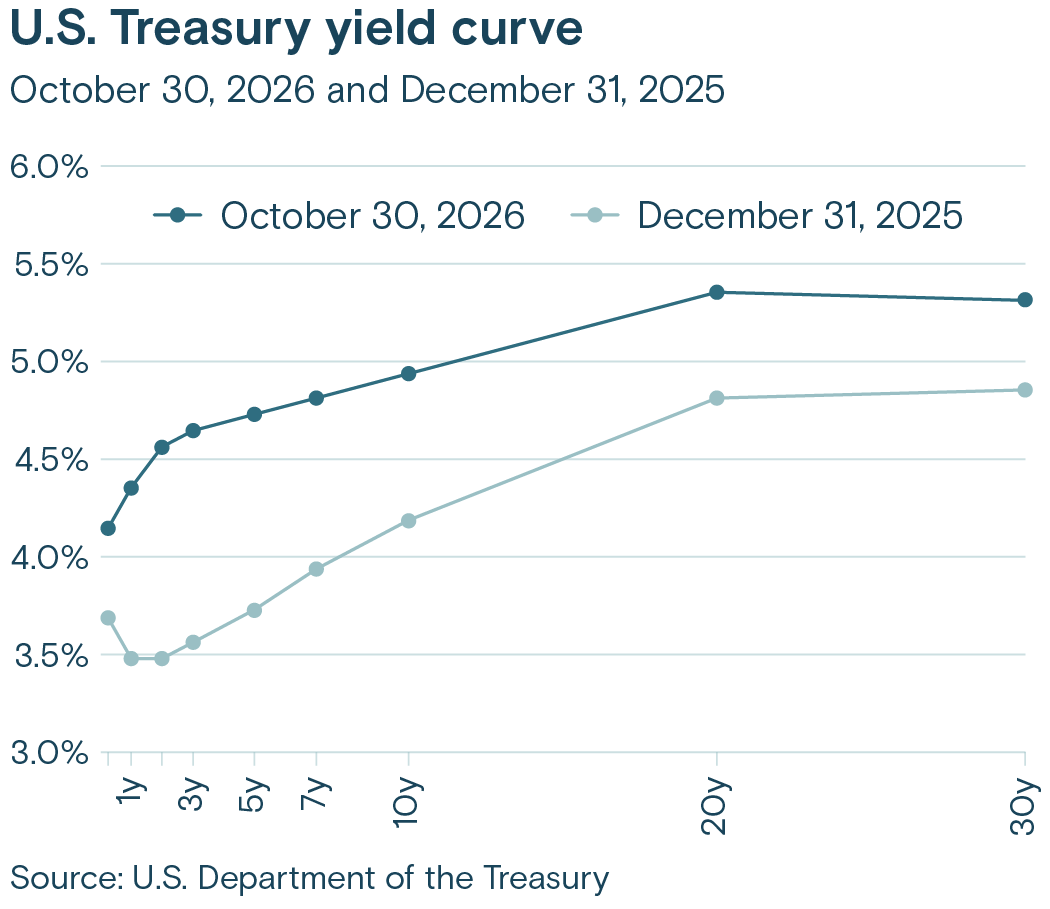
At the end of September, money market funds were holding $8.4 trillion in assets1, after rising steadily since 2018-2019. The preference for cash was fueled in part by it paying higher yields than longer-term investments. As shown in the figure below, as recently as the end of last year, the short end of the yield curve was inverted, with a 3-year Treasury note paying less yield than a 3-month Treasury bill.