AI mega-IPOs are on deck
For the two anticipated mega-IPOs in the near future, OpenAI and Anthropic’s growth has been substantial in a short amount of time. Anthropic’s revenues have grown substantially since January. It took Microsoft 15 years to see similar revenue growth, and Anthropic took just seven months.
Their rapid ascent highlights both the opportunity and challenges facing fund managers and investors. Building out AI tools and infrastructure has been a capital-intensive investment. There has been record public debt issuance for AI-related companies and massive amounts of private credit lending The reason is rapid growth in demand, helped by infrastructure (the internet, smartphones) that lets people explore a new technology in as little time as it takes to download an app.
Skepticism and even concern about AI’s ability to monetize its value persist among providers and users. While enterprise adoption is slower and requires more effort and cost, many companies are committing substantial resources to identifying use cases that suit their individual needs. AI investments are demonstrating value, with companies reporting revenue growth, lower costs or both. We expect most companies will, in time, find that most of their workflows can benefit from AI, but the path is unlikely to be smooth. Some companies are already balking at the cost of AI usage. Demand could fall in the short term, but we expect it is better optimization of AI’s computing time, not whether or not to use AI, that will lower costs and boost usage.
U.S. AI companies also face pressure from global competition. China’s AI developers have generated numerous headlines in the past year after claims that their models work either faster, cheaper or both. Global business may be entering the AI era, but it is a process that will take time. While it is difficult to predict whose AI models will ultimately claim the bulk of market share, we believe AI will improve productivity across the private sector, encouraging an optimistic view of equity valuations.
How Thrivent Asset Management approaches IPOs
As part of our active management investment process, our fund managers routinely monitor upcoming IPOs. We have participated in IPO investing, but we take a measured approach, preferring companies with established operating histories and sufficient publicly available information to make informed judgments. In line with our investment philosophy that earnings are a primary indicator of long-term returns, our investment criteria include both qualitative and quantitative measures, aiming to ensure each invested company has the resources, addressable market and management to generate growth and profits.
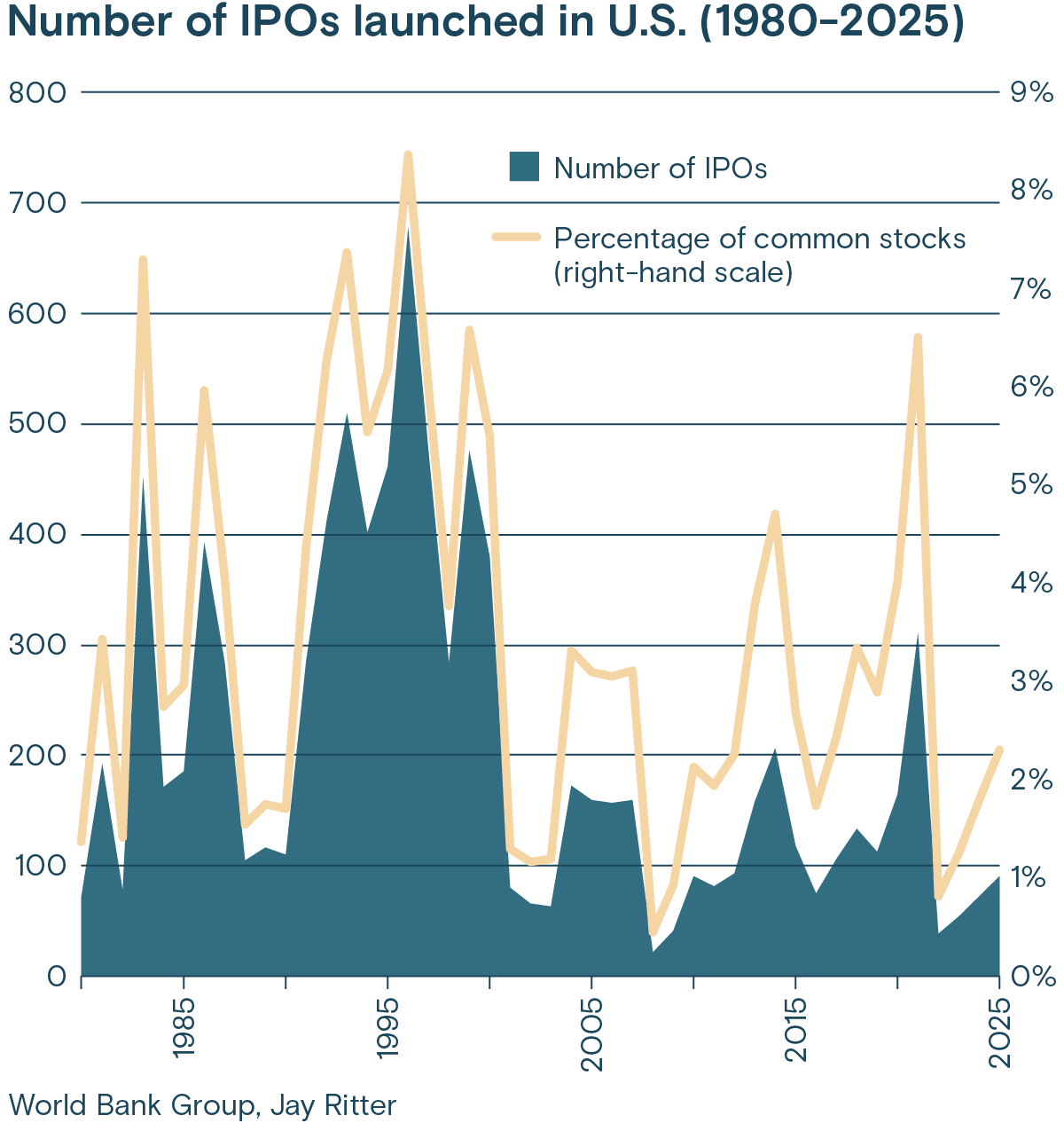
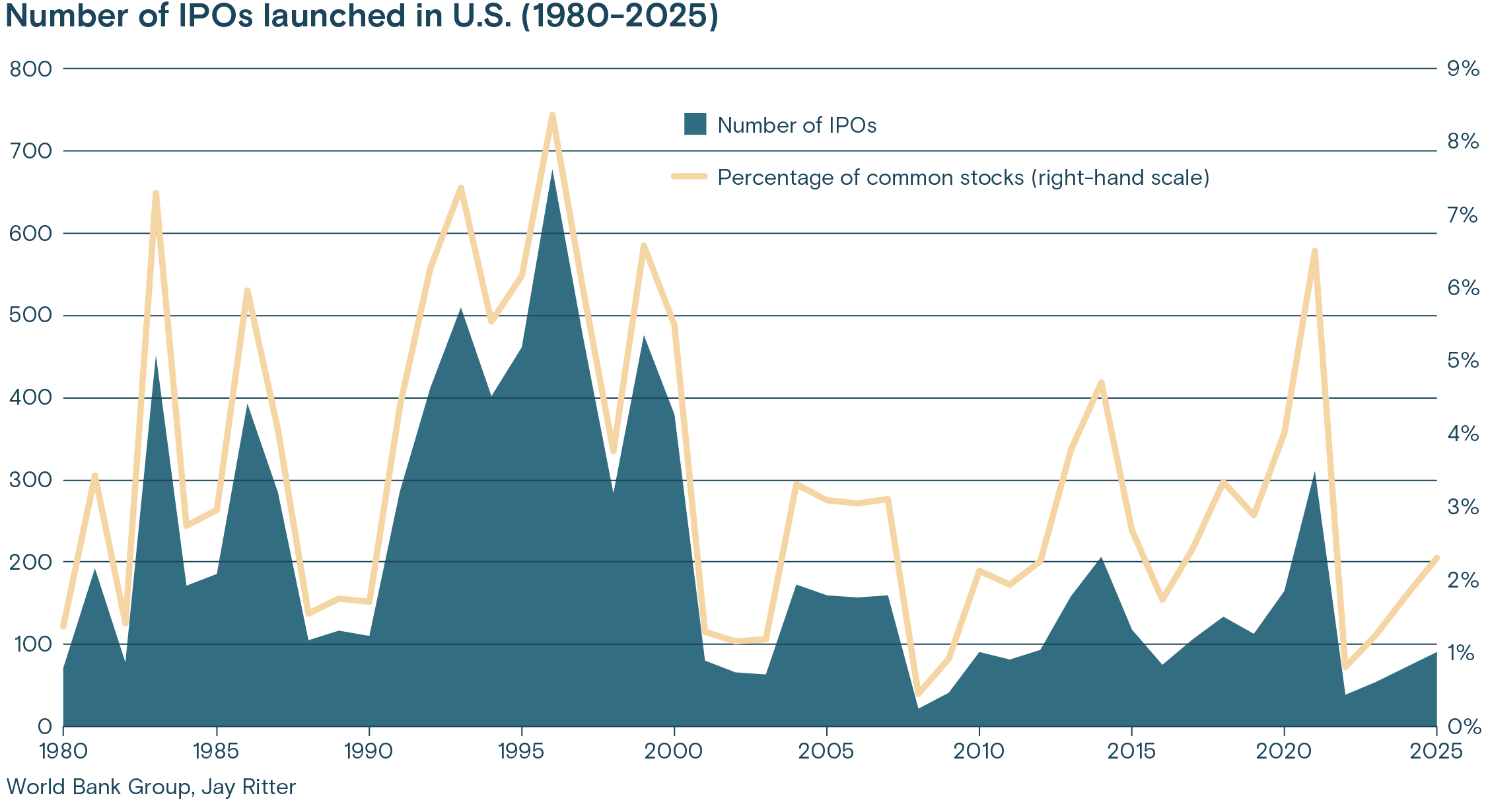
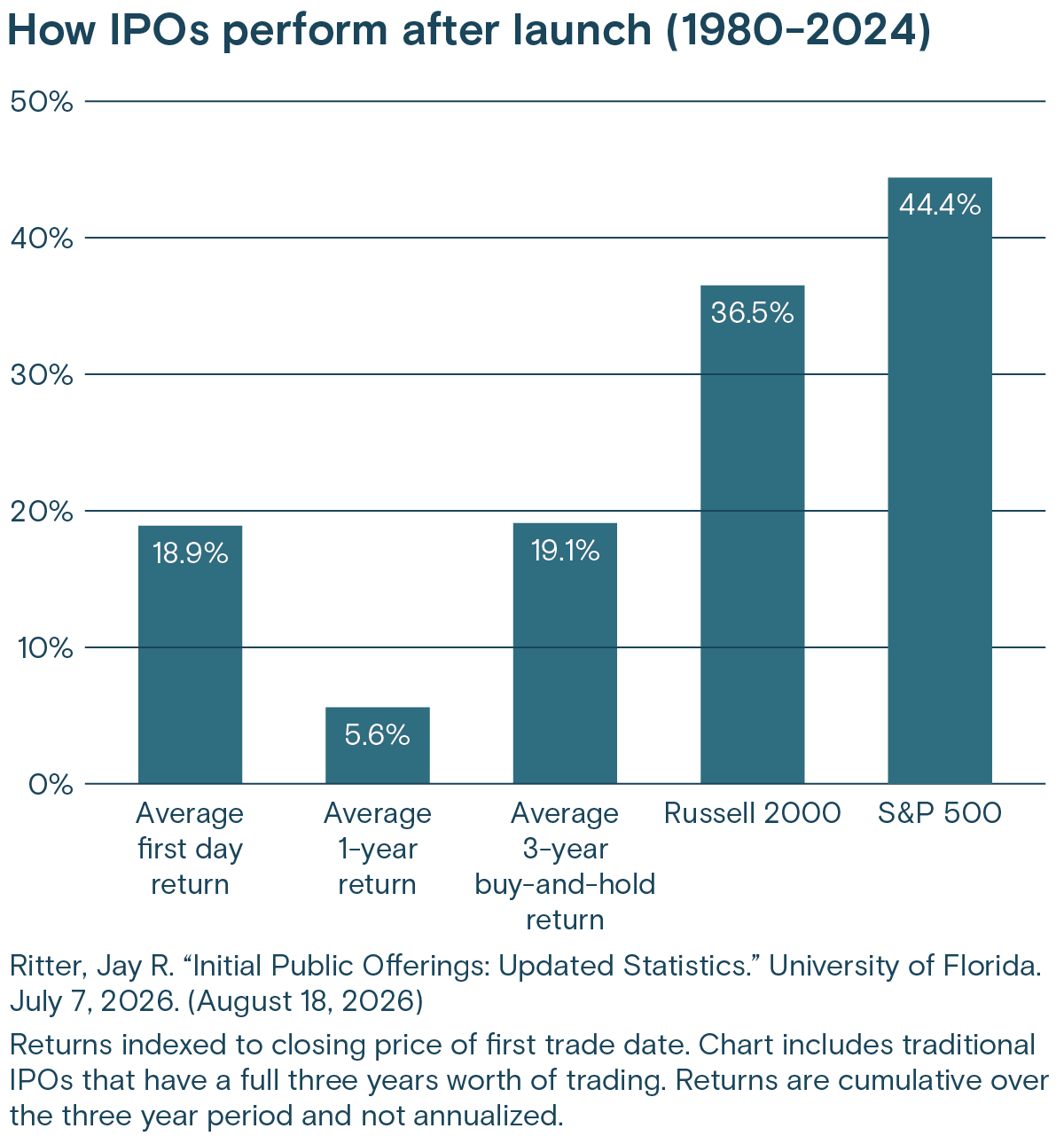
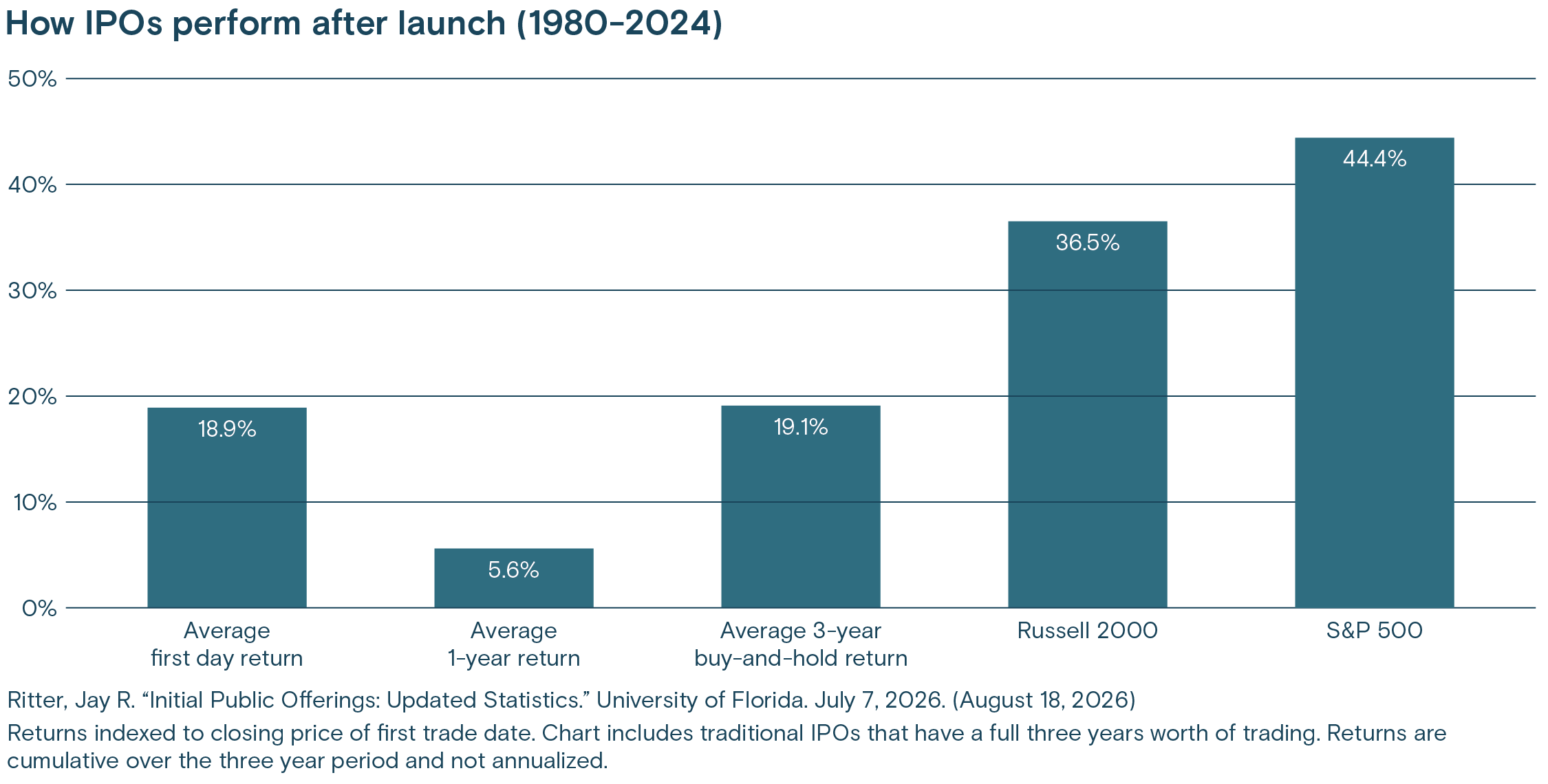
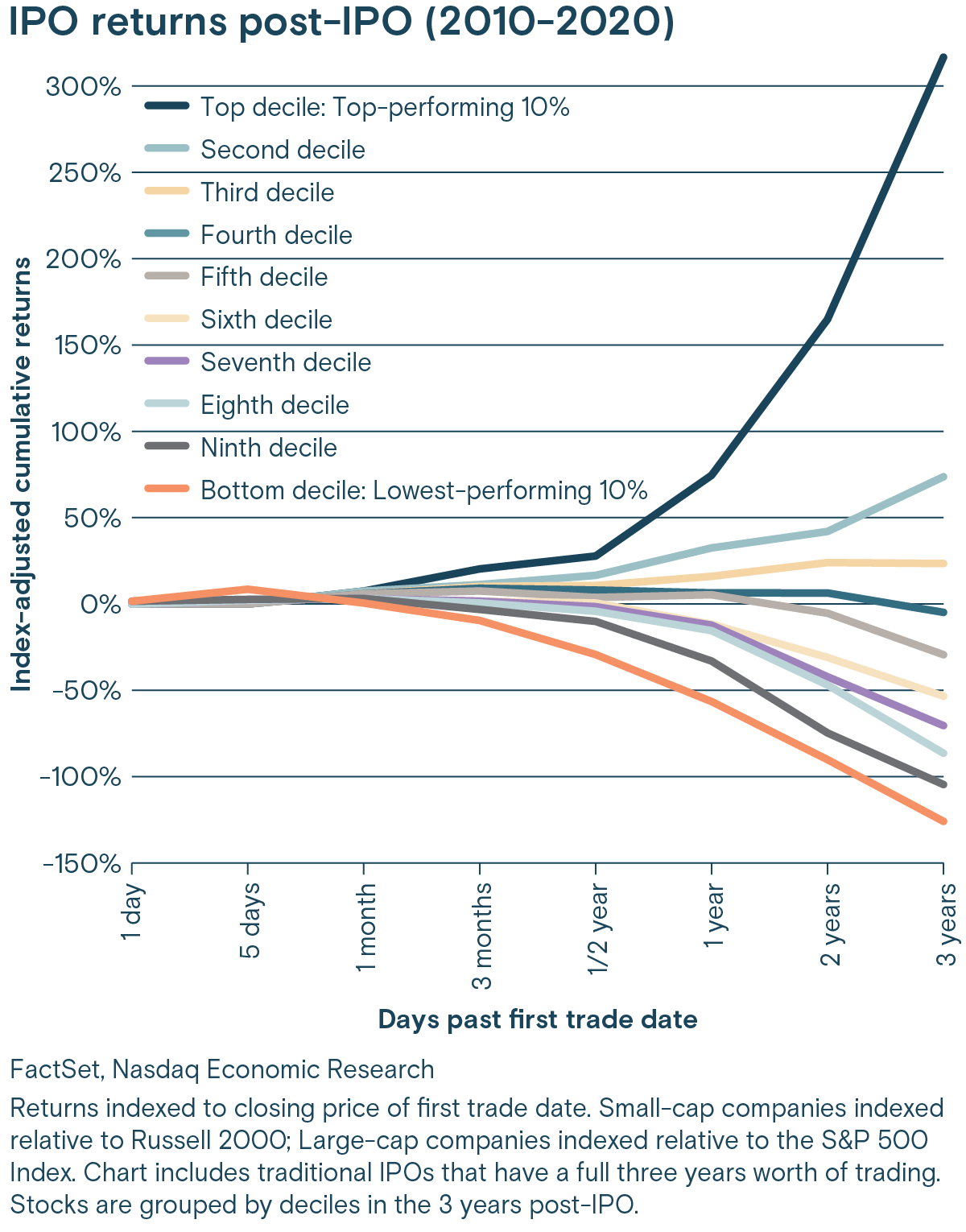
In 2025, of the more than 100 IPOs issued, the Thrivent Large Cap Growth Fund (THLCX) investment team identified just five IPOs that met their initial screening criteria. Of those, none passed the team’s robust due diligence process. While all five offerings have seen their stock prices rise, we remain mindful that many IPOs deliver disappointing performance, especially relative to the overall market over a longer period. As such, our research efforts remain dedicated to identifying companies we believe have sustainable competitive advantages (growth indicators) that can drive long-term outperformance relative to peers and the overall market.
A good example of this methodology was Thrivent Asset Management’s purchase of Amazon in 2007. It’s a company we believed was positioned well for success, led by Amazon’s Web Services division, which rapidly grew in subsequent years. Our fundamental approach to evaluating Amazon helped us understand the growth potential of the company’s web services platform, allowing them to be more confident on long-term revenue expectations.
The extent to which companies like OpenAI and Anthropic can repeat the rapid growth Amazon delivered remains an open question. But their recent growth rates, and the potential for a technological revolution that has been adopted more rapidly than previous revolutions make AI-related investment opportunities, broadly speaking, look promising for long-term outperformance. What ultimately will matter is one’s ability to identify which individual companies have the needed resources, the largest addressable market and the most talented management.